New Moon and Full Moon Meaning in Astrology
A new moon is for beginning and a full moon is for seeing clearly. Here is how the lunar cycle works, with UK dates and times for the months ahead.

The new moon and full moon meaning in astrology is simple: a new moon marks a beginning, and a full moon marks a peak or a release. The new moon is the dark start of the lunar cycle and suits setting intentions. The full moon, about two weeks later, shows results and what to let go of.
What is the difference between a new moon and a full moon?
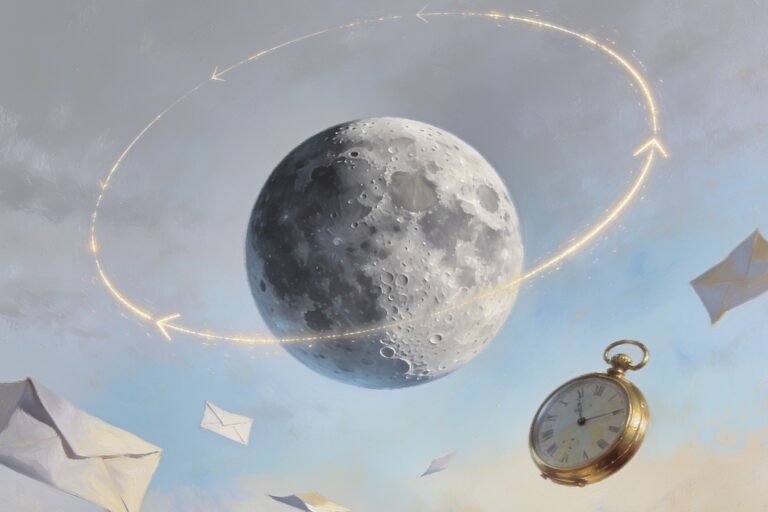
The Moon does not make its own light. It reflects the Sun. As it circles the Earth, we see more or less of its sunlit half. NASA’s guide to Moon phases explains that the full cycle repeats every 29.5 days.
At new moon, the Moon sits between the Earth and the Sun. Its lit side faces away from us, so the night is dark. At full moon, the Earth is between the two, and we see the whole lit face. It rises around sunset and stays up all night.
Astrology reads those positions as symbols. At a new moon the Sun and Moon are in the same star sign, so purpose and feeling point the same way. That is why it is linked with starting. At a full moon they are in opposite signs, so you see things from both sides, which is why it is linked with clarity, results and sometimes tension. If the Sun and Moon in astrology are new to you, read our guide to your Sun, Moon and rising sign first.
When the line-up is exact, you get an eclipse. A solar eclipse can only happen at a new moon, like the solar eclipse of 12 August 2026, and a lunar eclipse only at a full moon.
What are the eight phases of the lunar cycle?
Astronomers divide the cycle into eight phases. Waxing means the lit part is growing, and waning means it is shrinking. Astrologers give each phase a theme, a bit like the stages of a project.
- New moon: begin. Decide what you want from the month ahead.
- Waxing crescent: take the first small steps.
- First quarter: act. The first obstacle often shows up here, and you choose whether to push on.
- Waxing gibbous: adjust and improve what you have started.
- Full moon: see clearly. Notice what has worked, celebrate it, and release what has not.
- Waning gibbous: share what you have learned and say thank you.
- Last quarter: clear out. Finish tasks and drop what is not needed.
- Waning crescent: rest and get ready for the next round.
You do not have to follow all eight. Many people simply mark the new moon and the full moon, which gives a natural check-in every fortnight.
When are the next new and full moons in the UK?
These are the exact times for the UK, taken from timeanddate.com’s Moon phase tables for London. The signs are from the Western (tropical) zodiac.
| Date | Phase | UK time | Star sign |
|---|---|---|---|
| Tuesday 24 November 2026 | Full moon | 2.53pm GMT | Gemini |
| Wednesday 9 December 2026 | New moon | 12.51am GMT | Sagittarius |
| Thursday 24 December 2026 | Full moon | 1.28am GMT | Cancer |
| Thursday 7 January 2027 | New moon | 8.24pm GMT | Capricorn |
| Friday 22 January 2027 | Full moon | 12.17pm GMT | Leo |
A few practical notes. The Moon looks full to the eye for about a day either side of the exact time. The December full moon falls in the early hours of Christmas Eve, so the night of 23 December is the one to look up.
Each sign adds its own flavour. A Gemini full moon is about conversations and getting the facts straight. Sagittarius new moons suit plans for travel and study. Cancer is about home and family, Capricorn about work and long-term goals, and Leo about confidence and creativity.
The new moon after these, on 6 February 2027, is a solar eclipse. You will find it in our calendar of key astrology dates for 2027.
How do you work with the new moon and full moon?
Keep it simple. A notebook and ten quiet minutes are enough.
At the new moon
- Write down up to three things you would like to begin or build this month. Keep them small and specific.
- Choose one first step you can take within two days.
- If you can, do it in the day or two after the new moon, when the first thin crescent appears in the evening sky.
At the full moon
- Read back what you wrote two weeks ago. What has moved? What has not?
- Notice your feelings without acting on them straight away. Astrologers link full moons with strong emotions.
- Finish something, give something away or let a grudge go.
- Step outside and look at it. That counts too.
A word of honesty. There is no settled scientific agreement that the Moon changes mood or behaviour. The value of a lunar routine is the routine: a regular, gentle pause to check where you are. Writing an intention does not guarantee an outcome, and missing a new moon does no harm at all.
How does Vedic astrology see the new and full moon?
In Vedic astrology the Moon is at the centre of everything. Your Moon sign, called your Rashi, is the main sign used for forecasts. Our guide to the Vedic Moon sign or Rashi explains how to find yours. Because Vedic astrology uses the sidereal zodiac, each new and full moon usually falls one sign earlier than in the table above.
The Hindu calendar counts lunar days, called tithis. The new moon day is Amavasya and the full moon day is Purnima. The waxing fortnight is Shukla Paksha, the bright half, and the waning fortnight is Krishna Paksha, the dark half.
Many festivals are set by these days. Holi and Raksha Bandhan fall on a Purnima. Diwali falls on an Amavasya, as we explain in our guide to Diwali 2026 in the UK.
You may hear that Amavasya is an unlucky day. Treat that with care. Tradition sets it aside for quiet, for charity and for remembering ancestors, and the biggest festival of light is held on it. A dark sky is not a bad sign. It is simply the pause before the Moon returns.
Frequently asked questions
What does a new moon mean in astrology?
A new moon is the start of the lunar cycle, when the Sun and Moon share the same star sign and the night sky is dark. Astrologers link it with beginnings. It is a good moment to set one or two small intentions and take a first step.
What does a full moon mean in astrology?
A full moon is the midpoint of the cycle, when the Sun and Moon are in opposite signs and the Moon is fully lit. Astrologers link it with results, clarity and strong feelings. It suits reviewing progress, finishing things and letting go of what is not working.
When is the next full moon in the UK?
The next full moon is on Tuesday 24 November 2026 at 2.53pm GMT, in Gemini in the Western zodiac. After that come full moons on Thursday 24 December 2026 at 1.28am GMT in Cancer and on Friday 22 January 2027 at 12.17pm GMT in Leo.
Is the new moon or Amavasya unlucky?
No. In the Hindu calendar, Amavasya is a day for quiet, charity and remembering ancestors, and Diwali itself is held on an Amavasya. A dark Moon is a natural part of the cycle. There is no reason to fear it or to avoid ordinary plans because of it.
The takeaway
The new moon is for starting and the full moon is for seeing clearly and letting go. Mark the next few dates, keep a short note each time, and let the cycle give you a steady rhythm for reflection. Nothing more is needed.
Newsletter
Astrology insights in your inbox
New articles and seasonal guidance, sent occasionally. No spam, and you can unsubscribe at any time.